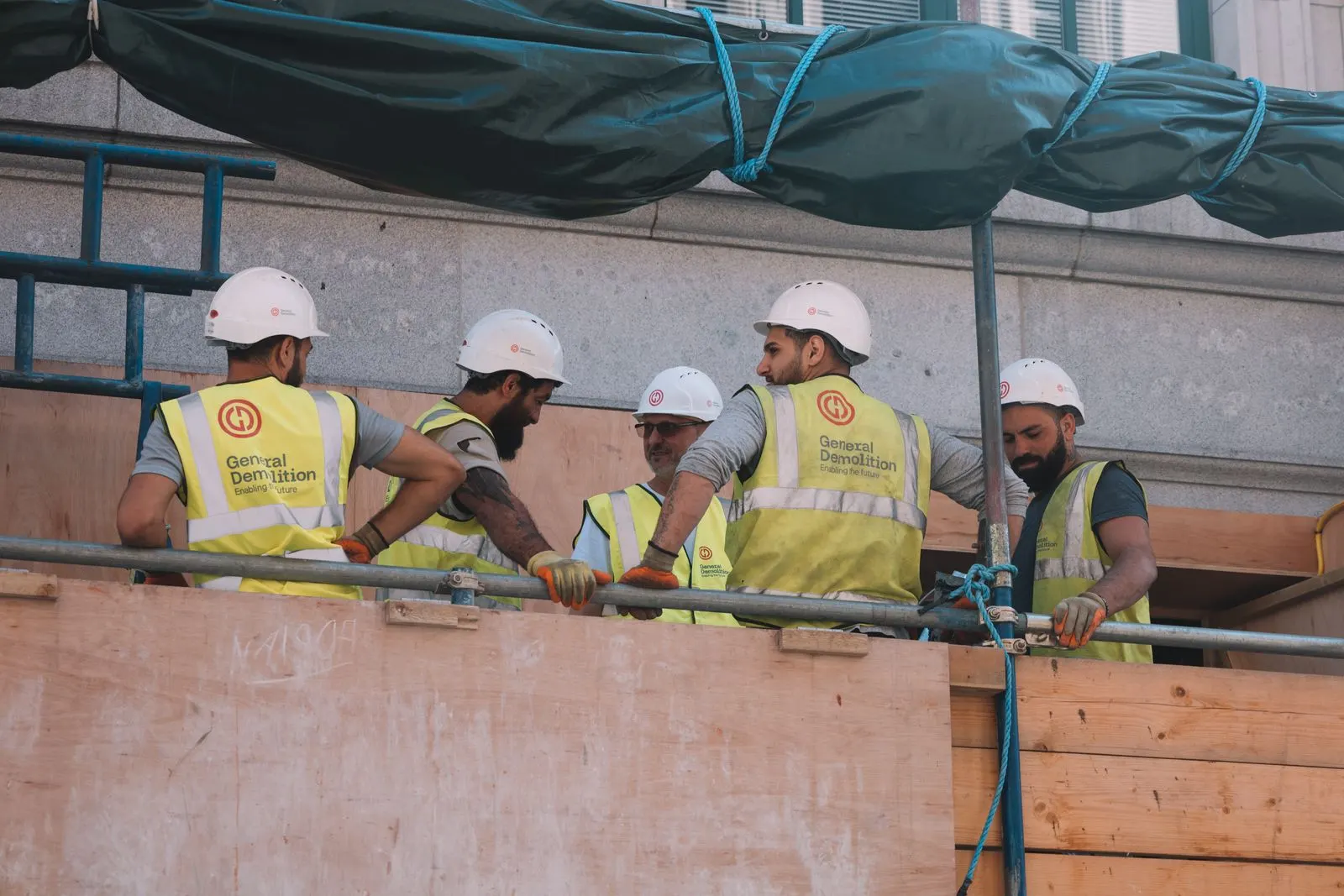
Who needs a California contractor license
California requires a CSLB license for any construction job where the total price for labor, materials and everything else is $1,000 or more. You also need one for any job that requires a building permit, no matter the price. Splitting a bigger job into smaller contracts to stay under $1,000 is not allowed.
The minor work exemption does not cover you if you advertise as a contractor or hire someone to help on the job. CSLB licenses a business, not just a person. Every license has a qualifying individual, called the qualifier, who has the experience, passes the exams and is responsible for supervising the work.
Basic eligibility: you must be at least 18 and have a Social Security number or an ITIN. There is no education requirement, and you do not have to attend a prep school.
License classes: A, B, B-2 and C
CSLB has three main classes, plus the B-2 residential remodeling class. You can apply for only one classification at a time when an exam is required. You can add more classifications after your first license is issued. See the full list on the CSLB license classifications page.
The B license has limits. A B contractor can take a framing or carpentry job by itself. For other jobs, the contract must involve at least two unrelated trades other than framing or carpentry, unless you hold the right specialty license or subcontract that work to a licensed specialty contractor. A B contractor also cannot contract for fire protection systems or well drilling unless they hold those classes or subcontract them.
| Class | What it covers | Exams |
|---|---|---|
| A General Engineering | Fixed works that need specialized engineering knowledge, such as highways, sewers, pipelines, bridges and dams | Law and Business + A trade exam |
| B General Building | Structures that need at least two unrelated building trades; framing or carpentry jobs on their own | Law and Business + B trade exam |
| B-2 Residential Remodeling | Projects on existing residential wood frame structures that involve three or more trades; no structural changes to load-bearing walls, no new or extended electrical or plumbing, no HVAC installs or replacements | Law and Business + B-2 trade exam |
| C Specialty (C-10, C-20, C-36 and more) | One specialized trade, such as electrical, HVAC, plumbing, roofing or pools | Law and Business + specific trade exam |
| C-61 Limited Specialty | Narrow trades not covered by another C class, listed as D subcategories | Law and Business only |
The 4-year experience rule and how to document it
The qualifier must have at least four years (48 months) of experience in the classification you are applying for, gained within the last 10 years. Only experience at the level of journeyman, foreman or supervising employee, contractor, or owner-builder counts. Time as a trainee, helper, laborer or apprentice does not count as journey-level time.
CSLB defines a journeyman as a fully qualified worker who can do the trade without supervision, or someone who finished an apprenticeship. A foreman or supervising employee has journeyman skills and directly supervises construction. Owner-builder experience counts only for B work on your own property, and you must file a separate project experience form for each project.
You document experience on the Certification of Work Experience form (13A-11), filed with your application. A certifier signs it. That person must have direct, firsthand knowledge of your work, such as an employer, coworker, journeyman, union rep, contractor or business associate. CSLB will not accept extra experience verification after your application is accepted, so get it right the first time.
- Fill out the form in black or dark blue ink. Pencil is not accepted.
- Use original signatures. Faxed, copied or stamped signatures are not accepted.
- Avoid strikeouts. Any correction must be initialed by the certifier.
- Describe the actual work you did in detail, not a copy of the sample text.
- Keep pay stubs, W-2s, tax records and permits. CSLB reviews a random 3 percent of applications and may ask for proof.
- Falsifying experience is a crime, and a licensee who signs a false form can be disciplined.
See where you stand in 10 minutes
Take the free CSLB Law & Business practice test. 15 questions, every answer explained.
Credit for education and apprenticeship
You can replace up to three years of the four with education, technical training or apprenticeship. At least one year must be practical, hands-on experience. You must send official transcripts or a certificate of completion.
CSLB lists these maximums: up to 1.5 years for an AA in building or construction management; up to 2 years for a four-year degree in accounting, business, economics, math, physics, a related field (architecture for B only), or a law degree; up to 3 years for a completed accredited apprenticeship in your trade, or a four-year degree in construction management or an engineering field related to the classification. Check CSLB's experience page for the full rules, since credit is decided case by case.
Some military service can count toward experience. Veterans who were not dishonorably discharged may qualify for expedited processing and a 50 percent cut to the initial license fee. See CSLB's military program.
Step by step: from application to license
Here is the path for a first license that requires exams. Exam waiver applicants use a different form (7065) and skip some steps.
- Pick your classification and business type: sole owner, partnership, corporation or LLC. Corporation and LLC names must match the Secretary of State record exactly.
- Choose the qualifier. A sole owner can qualify their own license or use a Responsible Managing Employee (RME). Corporations use an RMO or RME, and LLCs can use an RMM, RMG, RMO or RME.
- Complete the Application for Original Contractor License (13A-1) and the Certification of Work Experience (13A-11). Sole owners can also apply online.
- Mail it with the $450 nonrefundable application fee to CSLB, P.O. Box 26000, Sacramento, CA 95826. Do not send the bond or the initial license fee yet.
- Watch for your acknowledgment letter. It has your Application Fee Number and PIN for tracking status online. If CSLB returns your application, you have 90 days to fix and resubmit it, or it becomes void.
- Get fingerprinted by Live Scan with the packet CSLB sends you. Everyone on the license gets a criminal background check. Out-of-state applicants can use hard cards, but those can take 3 to 6 months.
- When you get your Notice to Schedule an Examination, book and pay for your exams directly with PSI Exams.
- Pass the Law and Business exam and, for most classes, your trade exam. You have 18 months from acceptance to pass.
- Answer the bond and fee letter: pay the initial license fee, file your bond(s), file workers' comp proof or an exemption, file LLC insurance if needed, and complete the online asbestos open book exam.
- CSLB issues the license. Your wall certificate and pocket card arrive by mail.
California contractor license fees in 2026
These are CSLB fees as of October 2026. Always confirm on the CSLB fee page before you pay, because fees are tied to your postmark date.
Exam fees are not included in the $450. You pay PSI each time you schedule or reschedule an exam. Bond premiums and insurance costs are set by your bond company and insurer, not CSLB.
| Fee | Amount (2026) |
|---|---|
| Original application, one classification | $450, nonrefundable |
| Initial license fee, sole owner (paid after exams) | $200 |
| Initial license fee, non-sole owner (paid after exams) | $350 |
| Live Scan: DOJ + FBI processing | $32 + $17, plus the site's rolling fee |
| Exam fees | Paid directly to PSI when you schedule |
| Active timely renewal, sole owner | $450 ($470 for C-10) |
| Active timely renewal, non-sole owner | $700 ($720 for C-10) |
| Additional classification on an existing license | $230 |
The exams: Law and Business plus your trade
Every qualifier must pass the Law and Business exam unless they qualify for a waiver. Almost every classification also has a trade exam. The C-61 Limited Specialty class is the exception and needs only Law and Business. Both are multiple-choice tests taken on a computer at PSI, and you get 3.5 hours for each.
PSI has test centers across California and one in Oregon. Trade exams must be taken in California or Oregon, but the Law and Business exam is also offered at PSI centers in other states. You get your result before you leave. If you fail, you get a breakdown by section, must wait 21 days, and then pay PSI to reschedule. CSLB does not publish a single passing score, and you are told the required percentage at the test site.
Law and Business covers contracts, employment law, safety, insurance, liens, business finance and license law. Most trade exams include blueprint or drawing questions. CSLB posts free study guides that show each exam's topics and weighting. Pair the guide with timed practice, such as our CSLB Law and Business practice test and B General Building practice test, so you know where you are weak before exam day.
Bonds, workers' comp and LLC insurance
Every active license must have a $25,000 contractor bond on file. If your qualifier is an RME, or an RMO who owns less than 10 percent of the company, you also need a separate $25,000 Bond of Qualifying Individual. You buy bonds from an insurance agent or surety company, not CSLB.
Workers' compensation: if you have employees, you must file a certificate of workers' comp insurance. If you have no employees, you can file an exemption instead, but not if you hold C-8 Concrete, C-20 HVAC, C-22 Asbestos Abatement, C-39 Roofing or C-61/D-49 Tree Service. Those classes need coverage even with no employees. A license qualified by an RME cannot use the exemption. Under current law, the requirement expands to all contractors, with or without employees, on January 1, 2028. Check CSLB's issuance page for the current rule, because this date has already been pushed back once.
LLCs have two extra requirements. First, a $100,000 LLC employee/worker bond, which protects workers against unpaid wages and benefits. Second, liability insurance with an aggregate limit of at least $1,000,000 if five or fewer people are listed as personnel of record. Add $100,000 for each person over five, up to a $5,000,000 maximum.
How long it takes in 2026
There is no fixed timeline. As of October 19, 2026, CSLB's processing times page showed exam applications received about two weeks earlier being worked on, and final fees and documents being worked on about 11 days after receipt. Criminal background review can add time. Check CSLB processing times, which are updated weekly.
In practice, the biggest delays come from returned applications (missing signatures, pencil, weak experience descriptions), slow fingerprint results and failed exams. A clean application, quick Live Scan and passing both exams on the first try is the fastest route. Your 18-month exam window gives you room to retest, but each retake costs money and a 21-day wait.
Keeping your license: renewal and changes
A license expires two years after the last day of the month it was issued. CSLB mails a renewal notice about 60 days before expiration, but renewing on time is your job. A timely active renewal costs $450 for a sole owner or $700 for other entities in 2026. Renew late and the fee rises to $675 or $1,050. An expired license can be renewed within five years. After that you must apply for a new one.
Keep your bond and workers' comp coverage current at all times. A lapse can suspend your license. Report address and personnel changes to CSLB within 90 days, since the post office does not forward state mail. If you stop contracting, you can make your license inactive. Inactive licenses do not need a bond or workers' comp on file, but you cannot bid or contract while inactive.
Frequently asked questions
Can I get a California contractor license without 4 years of experience?
Yes, in two ways. You can use education or apprenticeship credit to replace up to three of the four years, or your business can use a qualifier, such as an RME, who has the experience.
How much does a California contractor license cost in 2026?
CSLB charges $450 to apply and $200 (sole owner) or $350 (other entities) to issue the license. Add PSI exam fees, about $49 plus a rolling fee for Live Scan, and your bond premium and insurance.
Do I have to take the trade exam?
Most qualifiers do. The C-61 Limited Specialty class requires only the Law and Business exam, and some applicants qualify for an exam waiver under Business and Professions Code sections 7065 to 7065.4.
How many times can I retake the CSLB exams?
As many times as you need within 18 months of your application being accepted. You must wait 21 days between attempts and pay PSI each time. After 18 months the application is void and you must reapply.
Do I need workers' comp if I have no employees?
In 2026, most classes can file an exemption if they have no employees. C-8, C-20, C-22, C-39 and D-49 tree service contractors cannot, and current law extends the requirement to all contractors on January 1, 2028.
What is the difference between a B and a B-2 license?
A B license covers new and existing structures that need two or more unrelated trades. A B-2 is limited to existing residential wood frame structures, needs three or more trades per project, and cannot do structural, electrical, plumbing or HVAC system work.
Official sources
- CSLB: List of All CSLB Fees
- CSLB: Qualifying Experience for the Examination
- CSLB: Applying for the Examination
- CSLB: Exam Application Accepted
- CSLB: Issuing My License
- CSLB: Application for Original Contractor License (13A-1, rev. 01/2026)
- CSLB: 2026 Contractors License Law and Reference Book
- CSLB: Get Licensed to Build Workshop (2026)
- CSLB: Processing Times
- CSLB: Examination Study Guides
Practice tests for this license
California CSLB Law & Business Exam
Every California applicant takes Law & Business plus the trade exam for their classification.
California CSLB Class B General Building Trade Exam
The trade exam for California's most popular license class.
This guide is general information, checked October 2026, not legal advice. Licensing rules change; confirm with the licensing board before you apply.